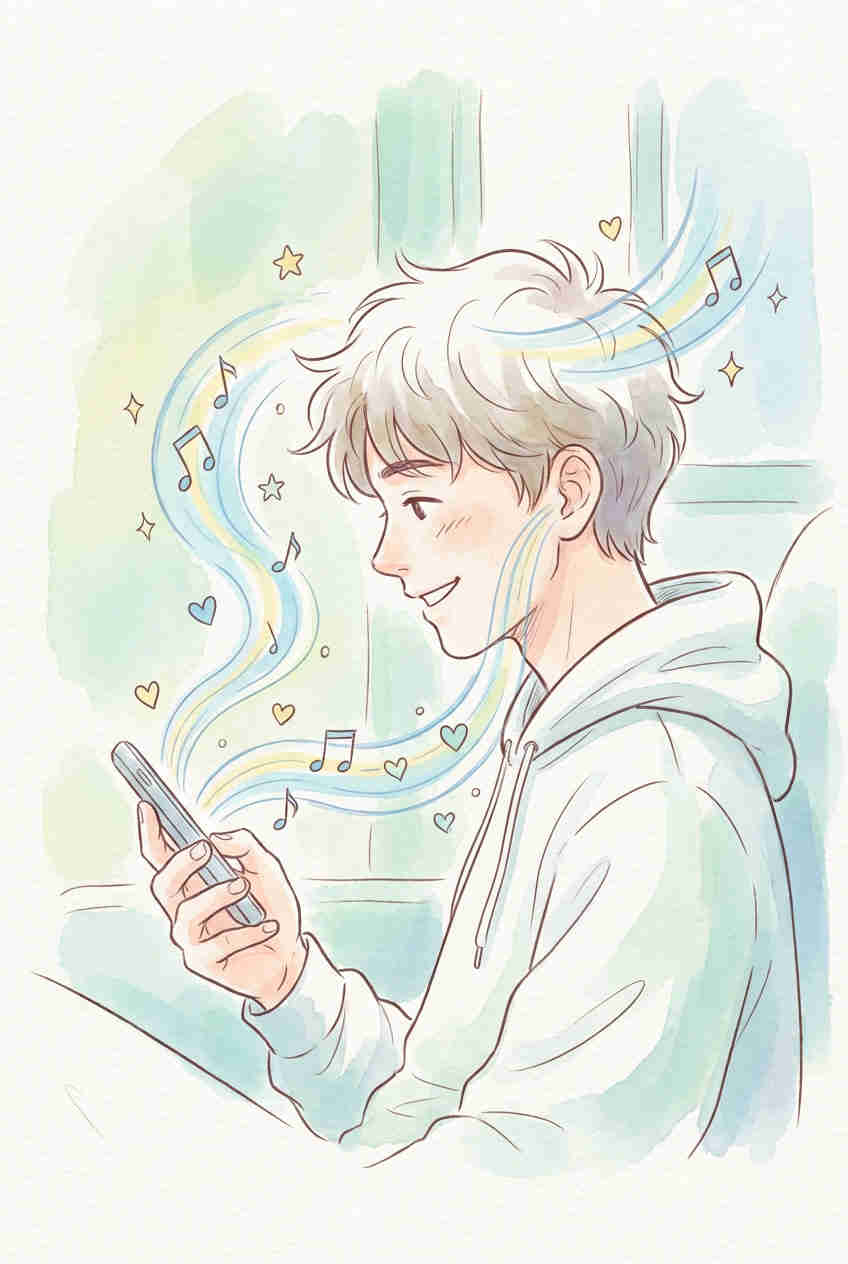
The Sound of Feeling: How Music Shapes Human Emotion
Music is one of humanity's oldest companions. It makes us weep, dance, fall in love, and remember. But why does a simple melody tug at our hearts, or a sudden dissonant chord send a chill down our spine? Let's explore what science --- and sound itself --- tell us about the intimate dance between music and emotion.
The Language of Emotion in Sound
Every sound we hear carries an emotional fingerprint. Research shows that different tones, rhythms, and chords can trigger distinct feelings --- even across cultures.
Joy and Excitement:
Fast tempos, bright timbres, and consonant harmonies tend to lift our spirits. Think of a lively Mozart sonata or the upbeat rhythm of pop music. Studies show that major chords and rapid rhythmic patterns stimulate areas in the brain linked to reward and pleasure (Bakker & Martin, 2015).
Sadness and Melancholy:
Minor keys, slow tempos, and soft dynamics evoke feelings of sorrow or reflection. Experiments with listeners show that minor triads consistently elicit sadness, even in those with little musical training (Pallesen et al., 2003).
Fear and Tension:
When composers want to make us anxious, they often use dissonant chords or irregular rhythms --- a technique that mirrors alarm calls in nature. Our nervous system instinctively associates rough or unstable sounds with danger, a link traced to evolutionary survival responses (Bryant, 2013).
Peace and Calm:
Slow, repetitive, and harmonically stable music --- like ambient soundscapes or gentle classical pieces --- lowers heart rate and promotes relaxation. Smooth intervals and consistent rhythmic flow soothe the brain's arousal centers, producing measurable calm.
These emotional cues are not arbitrary. They reflect deep biological and cultural wiring that makes sound an emotional language we all understand.
The Biology Behind the Music
Behind every goosebump-inducing melody lies a symphony inside our brains. Neuroscientists use tools like functional MRI (fMRI) and EEG to observe how music activates the limbic system --- the brain's emotional hub.
For instance, dopamine release occurs in anticipation of emotional peaks in music, similar to the reward response from food or social bonding. This was beautifully shown in neuroimaging work by Salimpoor and Zatorre, linking musical "chills" to dopamine bursts in the nucleus accumbens.
Meanwhile, other regions like the amygdala and orbitofrontal cortex respond differently to consonant and dissonant chords (Koelsch, 2014). Brain scans reveal that harmonious sounds activate pleasure circuits, while clashing tones engage those linked to fear or threat --- echoing our earliest instincts.
The Evolutionary Melody
Why does music have such power over us? Evolution may hold the answer.
According to Leonid Perlovsky's evolutionary theory of music (Perlovsky, 2010), musical expression emerged as a bridge between emotion and cognition in early humans. Before complex speech, musical vocalizations helped coordinate social groups and soothe infants. This emotional resonance fostered cooperation and empathy --- key survival advantages.
Similarly, Dale Purves argues in Music as Biology (2017) that the sounds we find pleasant often mimic the harmonic structure of human voices. In essence, music may be nature's way of reinforcing social connection --- a safe echo of our own emotions.
From Concert Hall to Console: Music in Video Games
Today, this ancient emotional power is being harnessed in new worlds --- especially in video games.
Game composers use musical cues to enhance immersion, guide players, and evoke emotional highs and lows. Studies in adaptive audio design show that music that reacts dynamically to gameplay --- shifting from soft ambient tones to intense dissonance during battle --- can significantly heighten player engagement and emotional depth (Prechtl, 2016).
As Karen Collins explains in Playing with Sound (2013), interactive music systems let players "feel" the narrative emotionally, not just intellectually. Recent projects like Dahiya's (2025) Interactive Emotional Resonance even use players' heart rates to adapt the soundtrack in real time, creating a loop of emotion between human and machine.
In Tune with Our Humanity
Music is far more than entertainment --- it's a biological, emotional, and evolutionary thread that connects us. From the ancient heartbeat of drums to the adaptive soundtracks of modern games, every rhythm reminds us that emotion is sound, and sound is emotion.
Next time a song moves you to tears or makes you feel alive, remember: your brain and your ancestors are both singing along.
Sources
- Perlovsky, 2010 -- Musical Emotions: Functions, Origins, Evolution
- Purves, 2017 -- Music as Biology: The Tones We Like and Why
- Bryant, 2013 -- Animal Signals and Emotion in Music
- Pallesen et al., 2003 -- Emotional Connotations of Major and Minor Chords
- Bakker & Martin, 2015 -- Musical Chords and Emotion
- Koelsch, 2014 -- Brain Correlates of Music-Evoked Emotions
- Collins, 2013 -- Playing with Sound: Music in Video Games
- Prechtl, 2016 -- Adaptive Music Generation for Computer Games
- Dahiya, 2025 -- Interactive Emotional Resonance